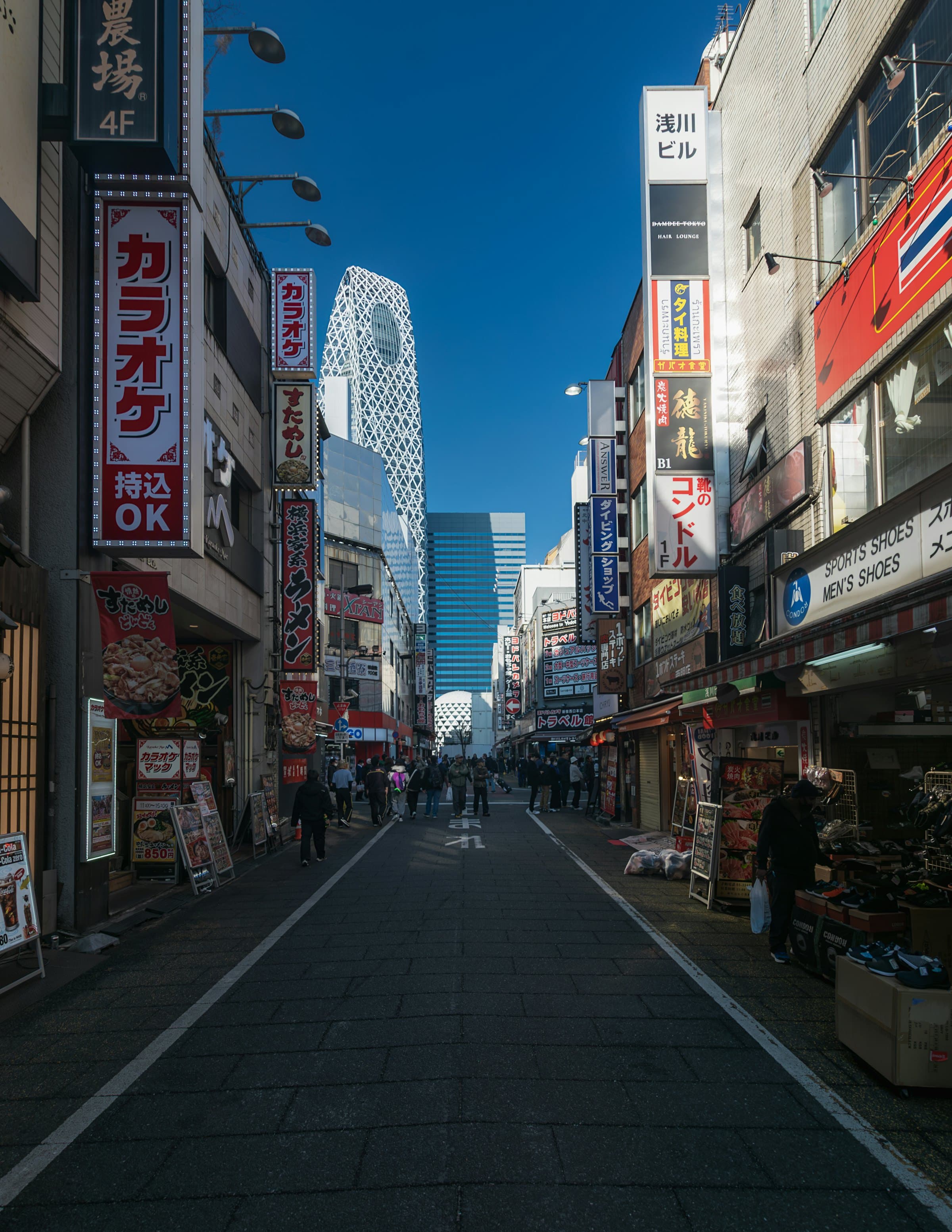
Your product can go on sale in Japan.Makuake requires that someone in Japanbe the one selling it.
Japanese crowdfunding is not fundraising, and the people who buy are not backers — they are shoppers placing a pre-order.
That is what makes it the one way an overseas brand can test the Japanese market before shipping stock into it.
- No Japanese entity needed to start
- Reply within 1 business day (JST)
What we take to Japan — Phase 1
- EDC & Tools
- Outdoor
- Stationery
- Bags
- Kitchen
- Wireless (Wi-Fi / BT)
- AC-powered · Li-ion
- Food & Beverage
- Cosmetics
- Supplements
- Beauty & medical devices

Crowdfunding in Japan is not a way to raise money.It is a way to test the market before you commit inventory to it.
The deadlock
No Japanese sales record
Japanese retail won't open an account
Japanese retailers, EC platforms and wholesalers ask for the same thing before they will open a trading account: evidence that the product already sells in Japan. You can't produce that evidence without being on sale. You can't get on sale without the evidence. The loop closes on itself.
A campaign is the one entry point that breaks the loop before you own a single unit of Japanese inventory.
What a campaign leaves you holding
A real sales record
Units sold in yen to Japanese customers, with names and shipping addresses attached. Not survey interest. Orders.
Japanese content and Japanese voices
A product page written in Japanese, photography and video shot for a Japanese buyer, and comments and reviews from Japanese customers you can quote later.
A compliance and fulfillment trail
Certification on file, labeling done, and a record of orders shipped and supported from inside Japan.
Japanese distribution asks for all three before it opens an account. A campaign is where you make them.
One thing to unlearn
In Japan the people who buy are not backers. The category is called 応援購入 (ōen kōnyū) — “supportive purchase” — and in practice it is a pre-order, not a pledge. A three-month delay or a late spec change reads on Kickstarter as part of the adventure. Here it reads as a seller failing to deliver what was sold, and it stays in the public comment thread under your project, permanently.
What Japanese platforms — and Japanese law —require of an overseas project owner.
None of this is our opinion. It is written in published platform rules and published statutes. We've linked all of it. Go check.
Group A
The operating wall
A question of who does the work.
“The editing and management of the project page must be able to be carried out in Japanese.”
プロジェクトページの編集・管理作業が日本語で行えること
What this means in practice
Every exchange runs in Japanese: the application, the review questions, the revisions they ask for, and every update you post while the campaign is live.
“Customer communication must be able to be handled in Japanese.”
ユーザーの対応が日本語で行えること
What this means in practice
This is not “we have someone on staff who speaks Japanese.” It is answering questions in a public comment thread, in Japanese, every day the campaign is live — and for months after it closes.
“Delivery of rewards must be limited to within Japan.”
リターンの配送が日本国内のみとなっていること
What this means in practice
Shipping direct from overseas to each buyer is not an option. Stock has to land in Japan, and something in Japan has to dispatch it.
Everything above still looks solvable by hiring someone who speaks Japanese. The next three are not.
Group B
The legal-identity wall
A question of who you are.
“The certifications required in Japan must already be obtained, or scheduled to be obtained.”
日本で必要な認証等を取得している(もしくは取得予定)であること
What this means in practice
Radio-emitting products fall under the Radio Act (電波法) and need Technical Conformity certification (技適 / TELEC). AC-powered products and lithium batteries fall under the Electrical Appliance and Material Safety Act (電気用品安全法, “DENAN”) and need PSE marking.
Read that far and it sounds like paperwork.
And filing it is not something you can do from outside Japan.
Under DENAN, the business notification and the obligation to apply the PSE mark fall on the party that manufactures the goods or imports them into Japan. The ministry defines the start of an import business by the date the goods are brought into the country. A company sitting outside Japan is not the party bringing them in — so someone inside Japan has to be.
And importing is not something you can do alone either.
Under Article 95 of the Customs Act, a non-resident carrying out customs procedures in Japan has to appoint a Customs Administrative Manager (税関事務管理人) — a person or company resident in Japan — and file that appointment with customs. A revision that took effect on 1 October 2023 tightened the filing further: it now has to state the relationship between the importer and the manager.
The floor under all six
And all six of them stand on the same floor.
A project owner of record, and a bank account at a Japanese bank held in that name.
The seller disclosure required by the Act on Specified Commercial Transactions (特定商取引法): the name of the business, an address in Japan, and a phone number in Japan, published on the page where the product is sold.
An address and a phone number outside Japan do not satisfy this. There is no overseas version of it.
For reference — how review runs
Three passes: does the business exist, can the product actually be delivered, and is it legal to sell in Japan. Budget several weeks, and expect questions in Japanese at each pass.
The six requirements are not six problems.They are one question asked six ways:who, inside Japan, is answerable for this product?
That party — the one those six requirements keep pointing at — is what people actually mean when they say “a partner in Japan.” It is the entire job, and it is the job we do.
So here are the same six, in the same order and the same words, with the only column that matters added: who does it.
| # | The requirement | Who does it |
|---|---|---|
| 01Group A | The editing and management of the project page must be able to be carried out in Japanese. | SOMAOur Japanese team writes and runs the page, and handles the platform review correspondence. |
| 02 | Customer communication must be able to be handled in Japanese. | SOMAEvery comment, every day the campaign is live, and after it closes. |
| 03 | Delivery of rewards must be limited to within Japan. | SOMADomestic warehousing and dispatch arranged inside Japan. |
| 04Group B | The certifications required in Japan must already be obtained, or scheduled to be obtained. | JointWe identify what your product triggers and sequence the work. The technical documentation and test samples come from your engineers. |
| 05 | The DENAN obligation sits with the party that imported the goods. | Structured case by case |
| 06 | A non-resident importer has to appoint a Customs Administrative Manager in Japan. | Structured case by case |
| —The floor | Project owner of record + Japanese bank account | Structured case by case |
| — | 特定商取引法 disclosure: business name, Japanese address, Japanese phone number | Structured case by case |
Group A
01The editing and management of the project page must be able to be carried out in Japanese.
02Customer communication must be able to be handled in Japanese.
03Delivery of rewards must be limited to within Japan.
Group B
04The certifications required in Japan must already be obtained, or scheduled to be obtained.
05The DENAN obligation sits with the party that imported the goods.
06A non-resident importer has to appoint a Customs Administrative Manager in Japan.
The floor
—Project owner of record + Japanese bank account
—特定商取引法 disclosure: business name, Japanese address, Japanese phone number
Those last four do not have one answer, and we are not going to pretend they do. The right structure changes with the product, the certifications involved and what you already have in place, so it gets designed per project. If something isn't realistic for your product, you'll hear it at the eligibility check — before you've committed to anything.
We'd rather name that openly than hand you a clean answer that doesn't survive contact with your product.
Scope of work
Platform selection & application
Which of the three platforms suits the product, the price point and the timing. We prepare the application and handle the review in Japanese.
Page build & Japanese copy (not translation)
The page is written in Japanese from the product up, not translated from your Kickstarter page. Photography, video and layout are directed for a Japanese buyer.
Certification mapping (TELEC / PSE / labeling)
Exactly which certifications and label markings your product triggers, what each one takes, and the order they have to happen in.
Campaign ops & promotion
Launch timing, Japanese PR and paid distribution, project updates, and the daily comment thread for the full run.
Backer support & fulfillment
Japanese-language support before, during and after the campaign, and dispatch to buyers from inside Japan.
After the campaign: retail / EC / distributors
The campaign leaves you a sales record, Japanese assets and a compliance trail. We use them to open the next conversation.
Three platforms. They do not acceptthe same things on the same terms.
| Makuake | CAMPFIRE | GREEN FUNDING | |
|---|---|---|---|
| English-language route for overseas owners | Conditions published | Dedicated English page | None found |
| Japanese company required? | — | States a company registered outside Japan can run a project | — |
| Individual or company | — | Companies only | Legal entity required |
| Run the project in Japanese | Required | — | — |
| Reward shipping | Within Japan only | — | — |
| Overseas remittance | — | Case by case, discuss in advance | — |
| Review | Three passes · several weeks | — | — |
| Source | Makuake Help Center(opens in a new tab) | CAMPFIRE overseas page(opens in a new tab) | — |
Makuake
- English-language route for overseas owners
- Conditions published
- Japanese company required?
- —
- Individual or company
- —
- Run the project in Japanese
- Required
- Reward shipping
- Within Japan only
- Overseas remittance
- —
- Review
- Three passes · several weeks
CAMPFIRE
- English-language route for overseas owners
- Dedicated English page
- Japanese company required?
- States a company registered outside Japan can run a project
- Individual or company
- Companies only
- Run the project in Japanese
- —
- Reward shipping
- —
- Overseas remittance
- Case by case, discuss in advance
- Review
- —
GREEN FUNDING
- English-language route for overseas owners
- None found
- Japanese company required?
- —
- Individual or company
- Legal entity required
- Run the project in Japanese
- —
- Reward shipping
- —
- Overseas remittance
- —
- Review
- —
Blank cells are conditions we could not confirm from a primary source, so we have left them blank. Platform terms change — confirm current conditions on each platform's own site before you decide. Last checked 2026-08.
It isn't as simple as CAMPFIRE to test and Makuake to scale. What fits depends on the product and on what you want the campaign to prove.
Wherever you launch, the three requirements in Group B don't go away. Choosing a platform is choosing operating terms. It isn't a way around the law.
Regulation follows the product category.This is the first fork in the road.
Ready
General goods — EDC and tools, outdoor, stationery, bags, kitchen.
Mostly a labeling question. The easiest way in, and the fastest to move on.
Possible — needs certification and lead time
- Wi-Fi or Bluetooth — the Radio Act (電波法), Technical Conformity certification (技適 / TELEC)MIC — Radio Equipment certification(opens in a new tab)
- AC power or lithium battery — the Electrical Appliance and Material Safety Act (電気用品安全法), PSE markingMETI — DENAN notification(opens in a new tab)
This is where the higher price points are. It also needs a schedule built backwards from the certification lead time, not forwards from your launch date.
Conditional — phase 2
- Food and beverage — the Food Sanitation Act (食品衛生法), the Food Labeling Act (食品表示法)
We decline
Cosmetics, supplements, beauty devices, medical devices. Regulated under the Pharmaceuticals and Medical Devices Act (薬機法).
The Act controls what can be manufactured, imported, labeled and claimed, and it puts all of it on a licensed party in Japan. We aren’t licensed for it, and we’re not going to learn it on your campaign. In phase 1 the answer is no.
Also applies to everyone
Act against Unjustifiable Premiums and Misleading Representations (景品表示法) — a struck-through “regular price” needs a reasonable basis behind it.
Stealth marketing rules (ステマ規制), in force since October 2023 — paid or incentivized posts must be labeled as advertising.
Product Liability Act (製造物責任法) — the importer of a product carries the same liability as its manufacturer.
Trademark — Japan is first to file. Having used a name first gives you nothing.
Six steps. We're honest aboutwhich ones we can put a clock on.
Eligibility check
1 business daySend us the product and we tell you which category it lands in, what certification it triggers, and whether we think it should go to Japan at all. Sometimes the answer is no.
- You
- Send a product page, spec sheet or existing campaign link.
- Us
- A written read on category, regulation and fit, within one business day.
Product & platform decision
Depends on the productWhich SKU goes first, which platform it goes on, what the campaign is meant to prove, and what the price and reward structure should look like for a Japanese buyer.
- You
- Pricing, margins, production capacity, what you want out of Japan.
- Us
- Platform recommendation, reward structure, and a Japan-side price built for the local market rather than converted from your USD price.
Certification & structure
Depends on the productThe two things that decide whether a launch date is real: what has to be certified, and who stands where. This is where 05, 06 and the two floor items get designed for your specific product.
- You
- Technical documentation, samples, factory contact.
- Us
- Certification mapping and process management, and a structure proposal we walk you through line by line before anything is signed.
Page & assets
Depends on the productThe page is built in Japanese from the product up. Photography and video are shot or re-directed for a Japanese audience. The application goes in and the review begins.
- You
- Product, materials, and answers to questions from our writers.
- Us
- Japanese copy, art direction, page build, application, review handling.
Live campaign
For the full runLaunch timing, PR and paid distribution, project updates, and the comment thread answered daily in Japanese.
- You
- Production and shipping schedule, and quick answers when a buyer asks something only you can answer.
- Us
- Everything that happens in Japanese, every day, for the full run.
After the campaign
Depends on the resultA campaign is an entrance, not an exit. You now have a sales record in yen, Japanese-language assets, and a compliance and fulfillment trail. Those are the three things a retailer, an EC platform or a distributor asks for first.
- You
- A decision on how far you want to take Japan.
- Us
- Introductions and the next-stage plan — retail, EC, distributors.
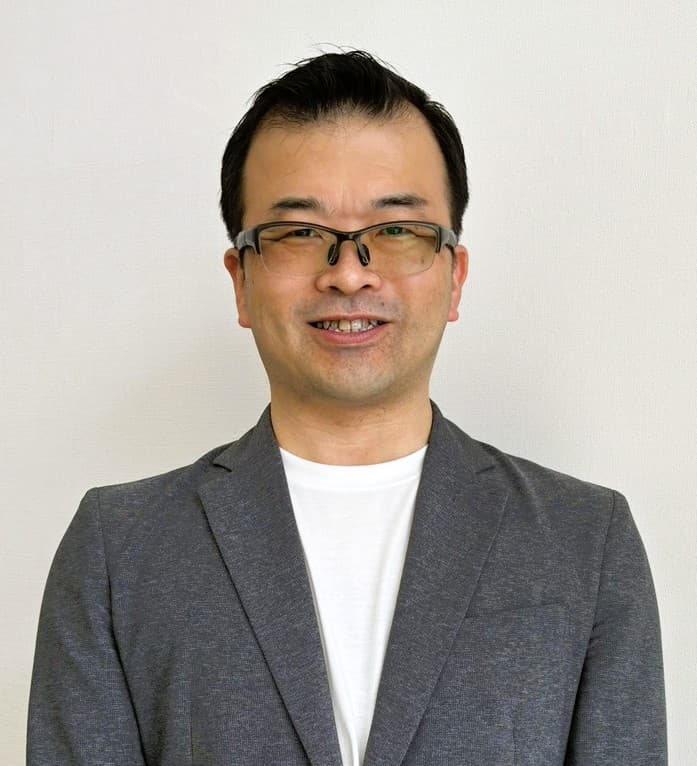
Takuma Naito
CEO, SOMA Inc.
Graduated in Hospitality Management from a university in San Francisco, worked as a manager at a U.S. company, then returned to Japan and founded SOMA.
He handles overseas clients himself, in English. No interpreter, no lag between your question and the answer.
“I spent enough years in the States to know how a product person there thinks about a launch. I've since sat through enough Japanese platform reviews to know which of those instincts get you rejected here.
Most of what I do is translating between those two things — and most of it isn't language.”
What we've actually done
The same team has run more than 100 crowdfunding campaigns on overseas platforms — Kickstarter, Indiegogo and zeczec. Eight of them are still live on Kickstarter, comments and all.
Verify for yourself:
- Campaign 01 on Kickstarter (opens in a new tab)
- Campaign 02 on Kickstarter (opens in a new tab)
- Campaign 03 on Kickstarter (opens in a new tab)
- Campaign 04 on Kickstarter (opens in a new tab)
- Campaign 05 on Kickstarter (opens in a new tab)
- Campaign 06 on Kickstarter (opens in a new tab)
- Campaign 07 on Kickstarter (opens in a new tab)
- Campaign 08 on Kickstarter (opens in a new tab)
We are a real company in Japan
Remember the floor under all six requirements — a business name, an address in Japan, a phone number in Japan. Here is ours.
- Legal name
- SOMA Inc.
- Address in Japan
- 127-9 Naka-Kibogaoka, Asahi-ku, Yokohama, Kanagawa 241-0825, Japan
- Phone in Japan
- +81 50-5367-5744
- Founded
- September 9, 2019
- Team
- 20 (including part-time and contract staff)
Questions we getbefore the first call.
Not to start, and not in every case. The platforms don't require the applicant to be a Japanese corporation as such. What they require is that the project can be operated in Japanese, that rewards ship within Japan, and that the seller disclosure under the Act on Specified Commercial Transactions shows a name, address and phone number in Japan. Some of that can be met without incorporating; some of it depends on the product, particularly where certification or importing is involved. We tell you which applies to yours at the eligibility check.
Japanese platforms settle funds to a Japanese bank account held in the project owner's name. There is no overseas payout option. How that account is held is part of the structure decided per project, and it's one of the first things we go through with you.
You don't. The project does. The page, the platform review, the updates and the public comment thread all run in Japanese, daily, for the length of the campaign and beyond it. That workload is ours. We work with you in English.
It splits. Technical Conformity certification under the Radio Act (技適 / TELEC) is granted against the product, and needs technical documentation and test samples only your engineers can produce. Under the Electrical Appliance and Material Safety Act, the business notification and the PSE marking obligation fall on the party that manufactures the goods or imports them into Japan, rather than on an overseas seller. We map which of these your product triggers and run the process; the technical inputs come from you.
It depends on the product and on how the launch is structured. Under Article 95 of the Customs Act, a non-resident carrying out customs procedures in Japan has to appoint a Customs Administrative Manager (税関事務管理人) resident in Japan and file that appointment with customs. Past that point, the right answer differs by product, certification and volume, and anyone who gives you a single answer before seeing your product is guessing. We'll tell you plainly what's realistic for yours — before you promise anyone anything.
税関事務管理人 — Customs Administrative Manager, often abbreviated ACP — is a person or company resident in Japan that a non-resident importer appoints to carry out customs procedures and receive notices on its behalf. The appointment is filed with the customs office on Customs Form C No. 7500. A revision that took effect on 1 October 2023 also requires the filing to state the relationship between the importer and the manager. Whether your launch involves you importing at all is the prior question, and that's part of what we work out with you.
Rewards have to ship from inside Japan, and buyer questions have to be answered in Japanese. In practice that means domestic warehousing, a domestic dispatch operation, and someone on the comment thread daily. That part of the work we do in-house.
There's no list price, because the work isn't the same twice — the platform, the certifications a product triggers, and how much of the operation sits with us all move it. We quote after the eligibility check, once we know what your product actually requires. The check itself is free and commits you to nothing.
We say so. In phase 1 we decline cosmetics, supplements, beauty devices and medical devices, all regulated under the Pharmaceuticals and Medical Devices Act (薬機法). We'll also say no to anything else where we don't think a campaign is worth your time. A clear no in one business day is more useful to you than a proposal.
Start with the eligibility check.
Tell us what the product is and what's inside it. You'll get a straight read on whether it can go to Japan, what it would need, and whether we think it should.
- We reply within one business day (JST).
- We work in English.
- No sales call.
About you
The single most useful thing you can send us — it tells us the category, the price point and most of the regulation.